Why Most Business Owners Start Small And Remain Small For Life?
Dear Reader
My name is Femi Otedola…
The sitting chairman of the oldest commercial bank in Africa, First Bank of Nigeria.
And here with me today is a mysterious piece of information that exposes a pattern of building a MIGHTY business empire.
Before I reveal it to you, take a look at this man in this picture…
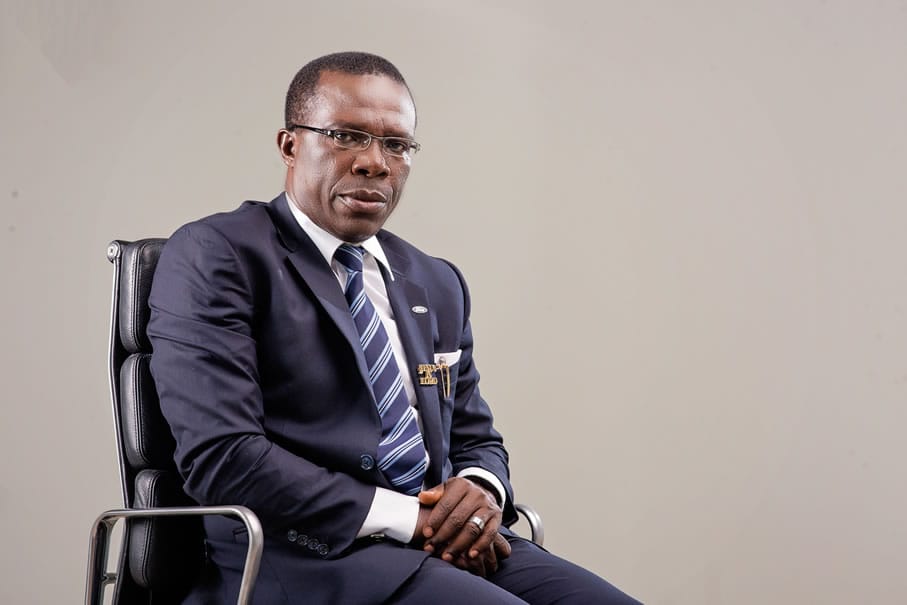
His name is Cosmas Maduka.
He’s the owner of the biggest car dealerships in Nigeria — Coscharis Group.
In fact, any BMW car found in Nigeria, his company is most likely linked to it.
But of course, he never started big.
He came from a poor background.
I’m talking about the real African poverty with no good food, water or a house with a healthy toilet.
His father died in 1962 and left him with ZERO inheritance.
A few years later, he went through the harsh conditions of the Nigerian Civil War from 1967-70, where he ate lizard, raw vegetables, and drank dirty stream water to survive.
After the Nigerian Civil War, his uncle took him to Lagos, Nigeria, to learn the motor spare parts business.
In case you’re wondering what the motor spare parts business looks like in Lagos, it looks exactly like this…
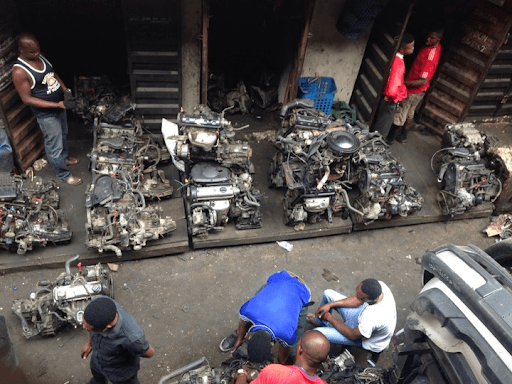
9 times out of 10, most who go into that business continue to play it small with few shops and a couple of millions of naira in the bank; they never go beyond that.
But!
Why was the case different for Cosmas Maduka?
How was he able to break away from what seems to be a normal pattern in the motor spare parts industry to build a multi-million dollar car dealership empire?
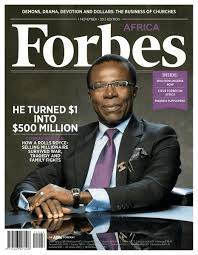
Bear in mind, he did it without coming from money or having a big last name.
What advantage did he have over the rest?
You see, oftentimes, the people who come from poor backgrounds tell themselves they cannot make it big, and they always give two reasons why they cannot, which are…
1. Lack of money.
2.Lack of connection.
To be honest with you, there’s so little a man can do if he does not have any money or connections.
But history has proved to us over and over again that a man can get both money and connections even if he was not born into them; all it takes is… time and strategic effort.
Do You Want To Make It BIG?
When you ask a successful person in Africa how he became successful, he’ll most likely tell you…
“It’s God and hard work”.
Let me ask you, is that the complete truth?
If it were only God and hard work, why are many hardworking people still not successful today?
Is it that God does not love them?
The truth is…
What separates successful people from unsuccessful ones is what they do and how they do it.
And today, you have a rare opportunity to see the exact steps a successful person took (from scratch) to build his business empire.
And that person is no other than… ME.
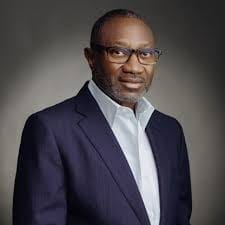
As I said earlier, my name is Femi Otedola.
Unlike Cosmas Maduka, I did not come from a poor background.
My father, before his death, was the ninth governor of Lagos, Nigeria.
I got my career start at his printing press business, which was one of the biggest in the country at that time.
I worked there for several years, where I eventually became the marketing manager of the company.
I resigned in 1994 to start up my own company, an investment and trading company.
A few years later, I moved into the Oil business, and the rest is history.
I can’t deny the fact that I enjoyed some great privileges that came with my last name in my business journey; nevertheless, I sweated for every success I’ve ever achieved.
The records don’t lie…
Take, for example…
When I started Zenon Petroleum in 1999, I saw that Nigerians were suffering a major setback in oil transportation due to faulty and unmaintained oil tankers.
Many heavily loaded tankers broke down on the roads for days, sometimes weeks, without immediate repair, which caused delayed delivery.
Although I started Zenon Petroleum as just a tiny company with only one truck, it grew to become the biggest diesel distributor in the country, overtaking top oil companies like Exxon Mobil and Chevron Texaco.
In fact, between 2003 and 2005, Zenon Petroleum became so big that it controlled about 93% of the Nigerian market and also determined the oil prices, which other oil marketers had no choice but to follow.
In 2007, Zenon Petroleum’s valuation increased from ₦35 billion to ₦217 billion within only six months.
However, darker times came in 2008 when the global financial crisis swept the world, pushing oil prices from $147 down to only $34.
At that time, $400 million worth of imported oil was on the high seas approaching the Nigerian seaport.
As if that was not enough bad news to swallow, the Nigerian government, in response to the global financial crisis, further devalued its currency, exposing Zenon Petroleum to more foreign exchange risk.
By the time the dust settled, Zenon Petroleum went from making billions of naira every month to owing over 9 banks a killing sum of $1.213 billion.
At that point, it didn’t matter whether my father was the ninth governor of Lagos…
The very moment my fortune changed, I was chased down by the banks I owed like a criminal.
Even close pals and associates took advantage of the situation, taking over my investments in several companies to offset the loans I owed the banks.
In 2010, the government stepped in and began buying up distressed loans from banks to save the economy.
By the way, Zenon Petroleum was the biggest debtor in the country at that time.
Zenon’s $1.213 billion loan was sold to the government for $800 million.
I went from owing the banks $1.213 billion to owing the government $800 million, which was some relief.
I was left with two options:
Either start over or file for bankruptcy to protect my assets.
I chose to start over.
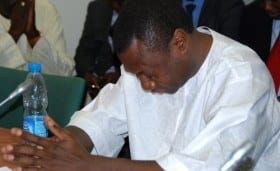
I gave up about 94% of my assets to settle the loans I owed.
I gave up over 110 of my real estate apartments…
I gave up my Bombardier private jet…
I gave up my investment in Zenith Bank…
I gave up my investment in Transcorp Hilton…
I gave up my investment in United Bank of Nigeria…
I gave up my investment in Exxon Mobil…
…and several other companies, just to start all over again.
I was left with my office building, my house in Ikoyi and a 34% stake in African Petroleum.
I merged African Petroleum with Zenon Petroleum, and in 2012, I rebranded the company into Forte Oil. We returned to profits that same year.
Why am I saying all these?
The hardest and most challenging moment for a man is to lose everything he’s built.
Most men who have gone through that phase never bounce back.
And you might say, I bounced back because of my wealthy background, but what would you say about Meshack Alloys, a technology and logistics entrepreneur who came from a humble background in Kenya, whose company collapsed and lost everything in 2023, but later bounced back in 2025.
How about Tesh Mbaabu, equally from a humble background, whose business — MarketForce — collapsed in 2024 and lost over 90% of his net worth.
He bounced back with a stronger company, integrated by Artificial Intelligence in 2025.
These are normal guys from regular families who bounced back without having a strong last name or a rich background.
Just like the popular saying goes…
You can give a million reasons for failure, but surely, there’s no excuse for failure.
And today, you have a rare opportunity to learn from me, Femi Otedola, who has made massive wealth, lost it all and gained even more back.
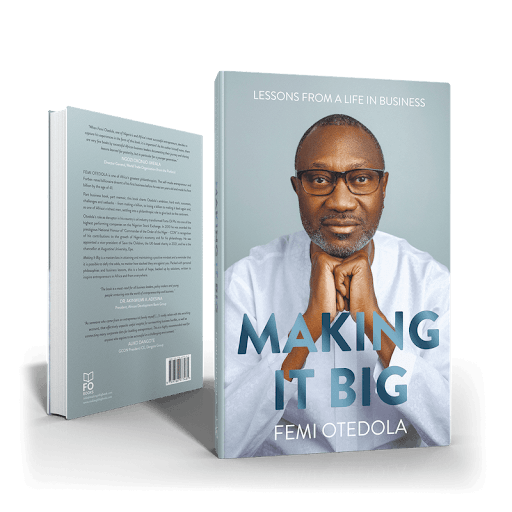
I have taken the pain to document every detail on how I did it in a book titled: MAKING IT BIG.
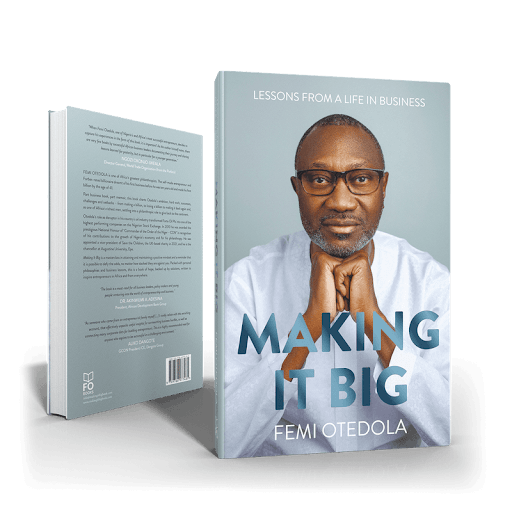
Bear in mind that before publishing, I distributed this book to top industry leaders, and this is what they have to say about the book…

This is an accurate guide to establishing a successful business and life in general
Chief (Dr.) Samuel Adedoyin
Chairman, Doyin Group Of Companies

When Femi Otedola, one of Nigeria’s and Africa’s most successful entrepreneurs, decides to capture his experiences in the form of this book, it is important! As the author himself notes, there are very few books by successful African business leaders documenting their journey and sharing lessons learned for posterity, but in particular for a younger generation.
NGOZI OKONJO-IWEALA
Director General, World Trade Organisation

The book is a must-read for all business leaders, policy makers and young people venturing into the world of entrepreneurship and business.
DR. AKINWUMI A. ADESINA
President, African Development Bank Group
As someone who came from an entrepreneurial family myself […] I vividly relate to this enriching account, which effectively unpacks useful insights for surmounting business hurdles, as well as connecting many corporate dots for budding entrepreneurs. This is a highly recommended read for anyone who aspires to be successful in a challenging environment.
ALIKO DANGOTE, GCON
President, Dangote Group
Here are some important details you’ll find in the book:
And many, many more!
Many establishments may not want this story told, but I have decided the next generation NEEDS to know so they can navigate their entrepreneurial journey.
Most people give up at the first stage of failure, but they forget that the successful ones they look up to have failed and are still failing; the only thing that matters is your next move, and this documentary book proves exactly that.
This is why it took me over 3 years to finalise this book.
I tried my best not to cover up any of my failures so you can learn from them.
But before I move on, I want to make this clear…
Reading this book does not, in any form, guarantee you business success.
As a matter of fact, you might read it and go back to your normal life as if nothing happened.
Only a few will get hold of this book, and it will prevent them from making costly mistakes in business in the near future.
Just like the legendary philosopher — Socrates — once said:
“Smart people learn from everything and everyone, average people learn from their experiences, stupid people already have all the answers”
This book documents the journey of a successful businessman who found success, lost it, but went ahead to gain even more success.
This is a rare opportunity for you to learn from everything because he’s giving you details, undiluted.
And the good news is…
You can get a copy right now for a modest fee.
For as low as ₦8,000, a soft copy (PDF) can be instantly emailed to you.
But if you prefer reading in paper packs for less distraction, you can get it for only ₦15,000.
Maybe you prefer your copy of the book to come in hardcover; you can get a copy for only ₦25,000.
You’re rich, why not give out your book for FREE?
Have you seen what people do to free things?
Most never value them.
As a matter of fact, if my book is available to everyone in the world, almost no one will read it, and the information in the book will be overlooked.
And if you have a mentality of getting or begging for things for FREE, this book is definitely not for you.
I didn’t create this book to enrich myself or seek credit for myself in any way.
If I wanted credit, I could easily get credit from the charity contributions I am involved in every time, but I don’t care.
Just on October 26, 2023, because of my selfless donations to Augustine University, Lagos, over the years, I was made the chancellor of the university.
While being inaugurated as the chancellor on that day, I gave out ₦1million each to over 700 graduates who graduated from the university that year.
Today, you could decide not to get a copy of my documentary book, and I wouldn’t even notice.
It’s your loss, not mine.
I have houses scattered all over the world.
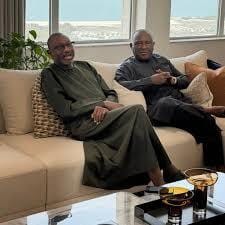
I could decide to relax in one of my houses in Monaco today, and jet over to another in Dubai.
As a matter of solid fact, any profit I might get from selling my documentary book, which is packed with important information, will go into more charity donations.
I have nothing to gain except from informing the new generation of entrepreneurs about the challenges ahead and how to navigate them with the lessons from my personal documentary book.
For only ₦8,000 for softcopy…
₦15,000 for paperpack…
₦25,000 for hardcover copy…
You’ll get access to rare information like:
The brutal truth about Nigeria's oil industry that allowed one man to capture 93% market share in just FIVE YEARS—while multinational giants watched helplessly.
Why Femi Otedola says "you need not invent anything" to become a billionaire (this controversial claim flies in the face of everything Silicon Valley preaches).
The "corridor of power" strategy that matters MORE than having the best product, the smartest team, or even the most capital (politicians hate when this gets exposed).
What happened when Femi Otedola LOST an entire billion dollars—and the counterintuitive moves he made that rebuilt his empire even BIGGER than before.
The childhood hustle that predicted a billionaire: Why offering manicures and pedicures to house guests at age 10 revealed more about wealth-building than any MBA program.
How Femi Otedola pivoted from being a "loan shark" into dominating the downstream oil sector—the exact moment he recognised the shift that made him unfathomably rich.
The newspaper headline that "upended his world": "Femi Otedola's sinking empire and his floating 12 million yacht"—and how he turned public humiliation into his greatest comeback.
Why the COLLAPSE of Zenon (his flagship company) was actually "the best thing that happened" to him—the hidden blessing in total financial devastation.
The uncomfortable lesson from his father's failed investment: Why Chief Adebowale lost everything when the government reversed policy—and how Otedola ensured it would NEVER happen to him.
How Femi Otedola transformed Forte Oil into one of the highest-performing companies on the Nigerian Stock Exchange, while established players like Mobil, AP, and Texaco scrambled to compete.
The "discipline and forgiveness" formula that pulled him out of a 220-billion-naira debt hole (this section alone is worth 10X the book's price).
Why traditional "Research & Development spending" is a waste of time for certain industries—and how Africa's richest entrepreneurs build billion-dollar empires without it.
The moment Femi Otedola realised academic performance meant NOTHING—and decided to "take charge of my life" instead (nearly killed his mother, but made him a fortune).
How he went from controlling the diesel market to being publicly shamed for debt—then clawed his way back to donate $14 million to charity.
The raw, unfiltered truth about "making it big" in emerging markets that Harvard Business School case studies conveniently leave out.
Why Femi Otedola says wealth without a giving attitude is "hollow"—and the philanthropic strategy that's now defining his legacy (after making AND losing billions).
The strategic pivot moment: How Femi Otedola identified that foreign players like Marc Rich, Glencore, and Trafigura had a chokehold on Nigeria's oil—and systematically dismantled their monopoly.
What the WTO Director-General (Ngozi Okonjo-Iweala) says makes this book "vital" for the next generation—it's NOT what you think.
How a man with "no academic brightness" outsmarted multinational corporations with billion-dollar research budgets (the great equaliser nobody talks about).
The "resilience and reinvention" blueprint used to turn moments of crisis into opportunities—even when the entire media was reporting your downfall.
Why are there "very few books by successful African business leaders" documenting their journey—and what Femi Otedola reveals that others WON'T.
The unspoken truth about "visibility in the corridors of power" vs. marketplace competition—and why one creates billionaires while the other creates bankruptcies.
How Femi Otedola went from dreaming about his first business before age 10 to becoming one of Africa's greatest philanthropists by his 50s (the 40-year master plan).
What happened when Femi Otedola took over an industry previously dominated by Jean-Claude Meyer's Marca and other foreign giants who had "direct allocation" from Nigeria's national petroleum company.
And many more!
To get your copy right now, visit the website: www.makingitbig.com
Or click the button below to go directly to the website.
Good luck
Femi Otedola
Chairman
First Bank Nigeria